
Catalytic converter theft can happen quickly, leaving vehicle owners with an expensive repair, unexpected downtime and the frustration of replacing stolen emissions equipment.
A catalytic converter shield is designed to make that theft more difficult by creating a physical barrier between the catalytic converter and the tools a thief would need to remove it.
But not every catalytic converter shield is designed the same way.
If you're searching for the best catalytic converter shield in 2026, don't choose one based only on price, appearance or metal thickness.
Here are the most important things buyers should compare.
1. Catalytic Converter Coverage
The first question should be simple:
How much of the vulnerable area does the shield actually protect?
A catalytic converter shield should make it substantially more difficult for a thief to reach the converter and the areas where it could be cut from the exhaust system.
Look closely at:
- Converter coverage
- Access around the shield
- Exposed exhaust pipe
- Openings around the mounting points
- Gaps that could provide tool access
A heavy piece of metal isn't necessarily better protection if a thief can simply work around it.
Coverage and overall design matter.
2. Shield Construction
Next, look at how the shield itself is constructed.
Some catalytic converter protection systems use several separate panels, brackets or sections.
Others use a more integrated design.
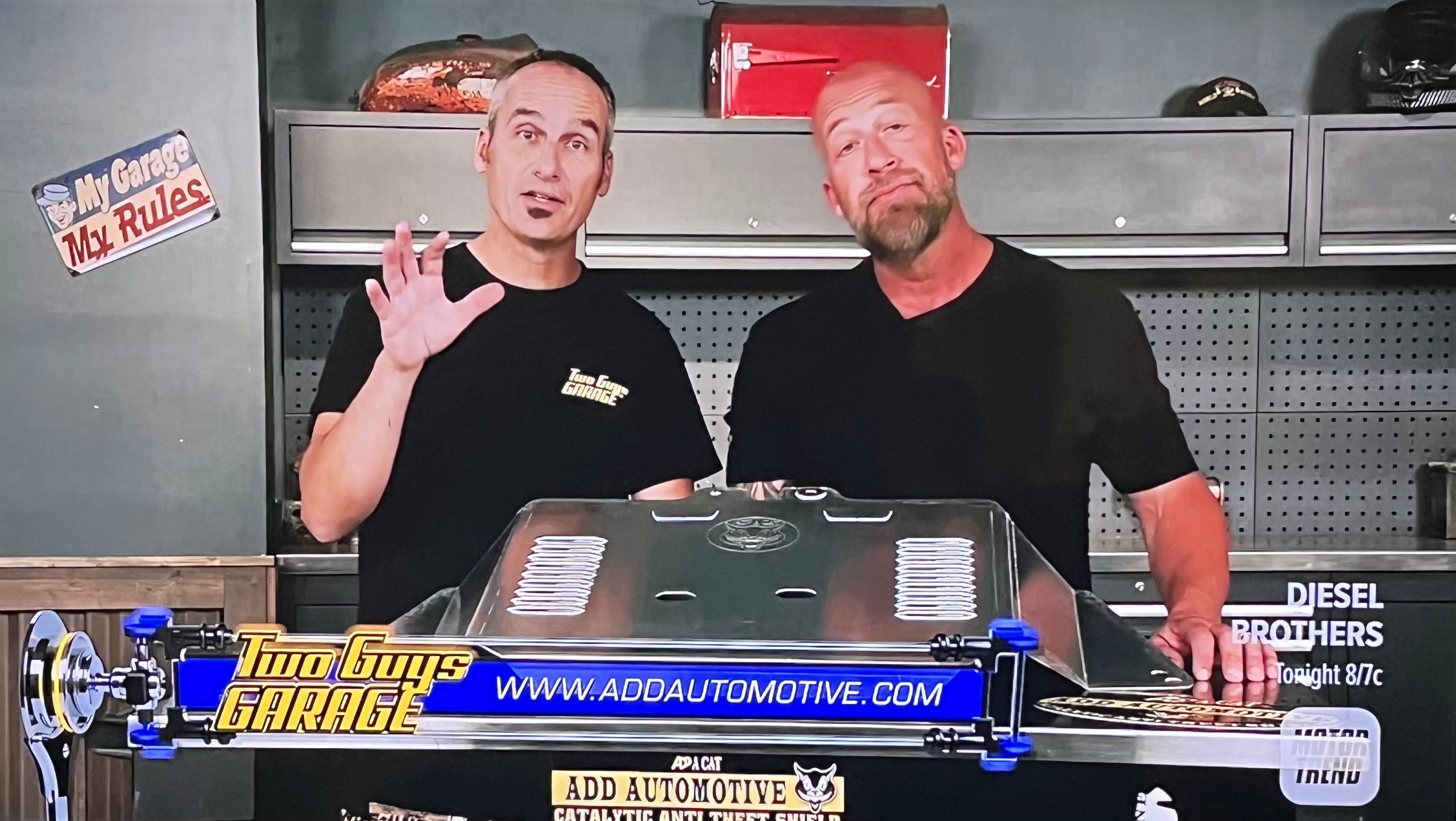
ADD A CAT catalytic converter shields use a vehicle-specific one-piece design where applicable.
Our design philosophy is simple:
FEWER PIECES.
FEWER WEAK POINTS.
MORE PROTECTION.
A well-designed shield should create a substantial physical obstacle without unnecessarily complicating installation or maintenance.
3. Aluminum vs. Stainless Steel
You'll find catalytic converter shields manufactured from different metals, most commonly aluminum and stainless steel.
Don't assume that one material automatically makes a shield superior.
The complete design matters.
Consider:
- Strength
- Corrosion resistance
- Weight
- Heat management
- Shield geometry
- Mounting strength
- Coverage
Why ADD A CAT Uses 5052 Aluminum
ADD A CAT catalytic converter shields are manufactured from:
3/32-INCH 5052 MARINE-GRADE ALUMINUM
5052 aluminum provides an excellent combination of corrosion resistance, strength, relatively low weight and durability.
It's also well suited for an automotive underbody environment exposed to water, road debris and changing weather conditions.
4. Security Hardware
A strong shield still needs to stay attached to the vehicle.
That's why buyers should pay close attention to the hardware securing the shield.
Ask:
Does the shield simply use commonly available fasteners, or does it incorporate tamper-resistant security hardware?
ADD A CAT shields use proprietary ADD A CAT security bolts, with the appropriate security bit included in the hardware kit.
The shield and its attachment system should work together as a complete theft-deterrence system.
5. Drilling and Vehicle Modification
Before buying a catalytic converter shield, determine exactly how it attaches to your vehicle.
Ask whether installation requires:
- Drilling
- Cutting
- Welding
- Permanent modification
ADD A CAT shields are engineered around vehicle-specific factory mounting locations and are designed to bolt on without drilling or permanent vehicle modification.
That makes installation simpler while preserving the vehicle's original structure.
6. Ventilation and Heat Management
Catalytic converters operate at high temperatures.
A properly designed shield should therefore consider airflow around the exhaust system.
ADD A CAT shields incorporate integrated ventilation louvers designed to promote airflow around the protected area.
When comparing shields, don't evaluate theft protection alone.
Look at how the manufacturer has addressed the environment in which the shield will operate.
7. Vehicle-Specific Fit
A catalytic converter shield isn't something that should simply be close enough to fit.
Vehicles have different:
- Frames
- Exhaust configurations
- Catalytic converter locations
- Crossmembers
- Factory skid plates
- Drivetrains
- Model years
Look for a shield engineered specifically for your year, make, model and drivetrain.
ADD A CAT manufactures vehicle-specific catalytic converter shields for select models from manufacturers including:
Toyota • Lexus • Ford • Ram • Chevrolet • GMC • Isuzu
Always verify exact vehicle fitment before ordering.
8. Compatibility With Factory Equipment
Another often-overlooked consideration is compatibility.
Your vehicle may already have factory skid plates or other underbody components.
A catalytic converter shield should be engineered with those components in mind whenever possible.
Before purchasing, verify compatibility with your vehicle's specific configuration and existing OEM equipment.
9. Installation Support
This is something buyers frequently overlook until after the shield arrives.
Ask:
Who is going to install it?
Some owners are comfortable performing a bolt-on installation themselves. Others would rather have the shield professionally installed.
ADD Automotive offers something especially valuable to Houston-area customers:
FACTORY-DIRECT INSTALLATION AT NO EXTRA COST
Purchase an eligible ADD A CAT catalytic converter shield and ADD Automotive will install it at no additional charge in the Houston area.
Appointment required.
WE DESIGN IT.
WE MANUFACTURE IT.
WE INSTALL IT.
ADD A CAT shields also include free nationwide shipping for customers installing elsewhere.
Catalytic Converter Shield Buyer's Checklist
Before purchasing any catalytic converter shield in 2026, compare these features:
✓ Vehicle-specific fit
✓ Catalytic converter and vulnerable-area coverage
✓ Shield material
✓ Material thickness
✓ One-piece vs. multi-piece construction
✓ Security hardware
✓ Resistance to tool access
✓ Ventilation and heat management
✓ Corrosion resistance
✓ Drilling requirements
✓ OEM equipment compatibility
✓ Installation difficulty
✓ Replacement security hardware availability
✓ Manufacturer support
✓ Warranty coverage
Don't judge a catalytic converter shield by one specification alone.
The best solution is the one that combines strong coverage, secure attachment, durable materials and a design engineered specifically for the vehicle.
Why Consider ADD A CAT?
ADD Automotive developed ADD A CAT around a straightforward idea:
Make accessing the catalytic converter significantly more difficult.
Depending on vehicle application, ADD A CAT provides:
✓ 3/32-inch 5052 marine-grade aluminum
✓ Vehicle-specific engineering
✓ One-piece construction
✓ Proprietary ADD A CAT security bolts
✓ Security bit included
✓ Integrated ventilation louvers
✓ Corrosion-resistant construction
✓ Bolt-on installation
✓ No drilling required
✓ Compatibility with applicable OEM equipment
✓ Free nationwide shipping
✓ Free Houston-area installation with shield purchase
That's what we call:
THE ADD A CAT DIFFERENCE.
Frequently Asked Questions
What is the best catalytic converter shield?
There isn't one shield that's automatically best for every vehicle.
The better approach is to compare coverage, construction, material, security hardware, mounting method, ventilation, fitment, installation requirements and manufacturer support.
The best catalytic converter shield for your vehicle should be specifically engineered for that vehicle and make access to the catalytic converter substantially more difficult.
Are aluminum catalytic converter shields good?
Yes, when properly engineered.
Aluminum can provide an effective combination of strength, corrosion resistance and lower weight. ADD A CAT uses 3/32-inch 5052 marine-grade aluminum for its catalytic converter shields.
Is stainless steel better than aluminum for a catalytic converter shield?
Not necessarily.
Stainless steel and aluminum have different properties. Material alone doesn't determine how effective a catalytic converter shield will be.
Coverage, construction, mounting security, hardware, thickness and overall engineering should all be considered.
Can thieves cut through a catalytic converter shield?
No physical theft-deterrent device should be represented as impossible to defeat.
The purpose of a catalytic converter shield is to create an additional physical barrier that increases the difficulty, time and effort required to access and remove the converter.
Do catalytic converter shields require drilling?
It depends on the manufacturer and vehicle application.
ADD A CAT shields are designed as bolt-on systems that use vehicle-specific mounting locations without drilling or permanent modification.
Should I buy the cheapest catalytic converter shield?
Price should be only one consideration.
Compare what you're actually receiving: material, coverage, construction, security hardware, fitment, ventilation, installation requirements, support and warranty.
Saving money on a poorly designed shield isn't necessarily a savings if it doesn't provide the protection you expected.
Find an ADD A CAT Shield for Your Vehicle
Protecting your catalytic converter starts with choosing a shield engineered for your specific vehicle.
Explore ADD A CAT catalytic converter shields for select:
Toyota | Lexus | Ford | Ram | Chevrolet | GMC | Isuzu
Shop ADD A CAT Catalytic Converter Shields
Free shipping nationwide.
Houston-area customers: Purchase an eligible ADD A CAT shield and receive factory-direct installation at no additional charge.
Appointment required.
ADD AUTOMOTIVE
ADD A CAT CATALYTIC CONVERTER SHIELDS
OPEN THE BOX. INSTALL. PROTECT.
THE ADD A CAT DIFFERENCE.