
Massive Catalytic Converter Theft in California:
Massive California Bust Exposes the Scale of Catalytic Converter Theft
A massive Southern California law-enforcement operation has revealed just how large the market for stolen catalytic converters can become.
In April 2026, Baldwin Park police and several cooperating agencies arrested four people and recovered approximately 1,800 suspected stolen catalytic converters from a location in Norwalk. Authorities estimated the converters had a combined value of approximately $500,000.
The operation followed a nine-month investigation that began after police noticed a significant increase in catalytic converter thefts. Investigators reportedly identified a location in South Los Angeles where stolen converters were allegedly being purchased and a Norwalk location where they were being stored.
For California vehicle owners, 1,800 recovered converters represent more than evidence in a criminal investigation. Each converter may represent a driver who walked outside, started a vehicle and discovered a loud, costly problem underneath it.
Catalytic Converter Theft Is Not Always a Small, Random Crime
Catalytic converter theft is sometimes treated as a quick crime committed by one person with a cutting tool. The scale of the Norwalk recovery demonstrates that individual thefts can feed a much larger trafficking and resale network.
Thieves target catalytic converters because they contain valuable precious metals, including platinum, palladium and rhodium. Once a converter is removed, it may be sold through illegal buyers, stored with other stolen units or processed for its metal content.
The result for the vehicle owner can include:
-
A loud and unsafe exhaust system
-
Damage to oxygen sensors, wiring and exhaust components
-
Towing expenses
-
An insurance deductible
-
An expensive replacement
-
Days or weeks without the vehicle
-
The possibility of being targeted again
The California bust should send a clear message: if criminals have a place to sell stolen converters, exposed vehicles remain potential targets.
Why California Vehicles Are Attractive Targets
California has a large number of cars, trucks, SUVs, vans and hybrids on the road. Some vehicles offer generous ground clearance and easy access to exhaust components. Others use catalytic converters that may be especially attractive because of their design or precious-metal content.
Frequently discussed targets include certain Toyota Prius, Toyota Tacoma, Toyota Tundra, Honda Accord, Honda CR-V, Ford truck and commercial-van applications. However, theft patterns can change, and no vehicle with an exposed catalytic converter should be considered completely safe.
Thieves may search apartment complexes, hotel parking lots, business lots, residential driveways and other locations where vehicles remain unattended. Darkness can help conceal a theft, but catalytic converters have also been stolen during daylight hours.
California Has Toughened Its Catalytic Converter Laws
California has adopted laws intended to disrupt the illegal resale market. The state restricts who may legally purchase detached catalytic converters and requires certain purchasers and recyclers to maintain transaction and vehicle-identification records.
California has also enacted requirements involving VIN markings and penalties connected to altered or removed identification.
These measures can help investigators identify suspicious converters and make it harder to sell stolen parts through legitimate businesses. However, laws and identification markings do not create a physical barrier underneath a parked vehicle.
VIN etching may help establish ownership if a converter is recovered. It cannot stop a cutting blade from reaching an exposed converter.
A Catalytic Converter Shield Creates Physical Protection
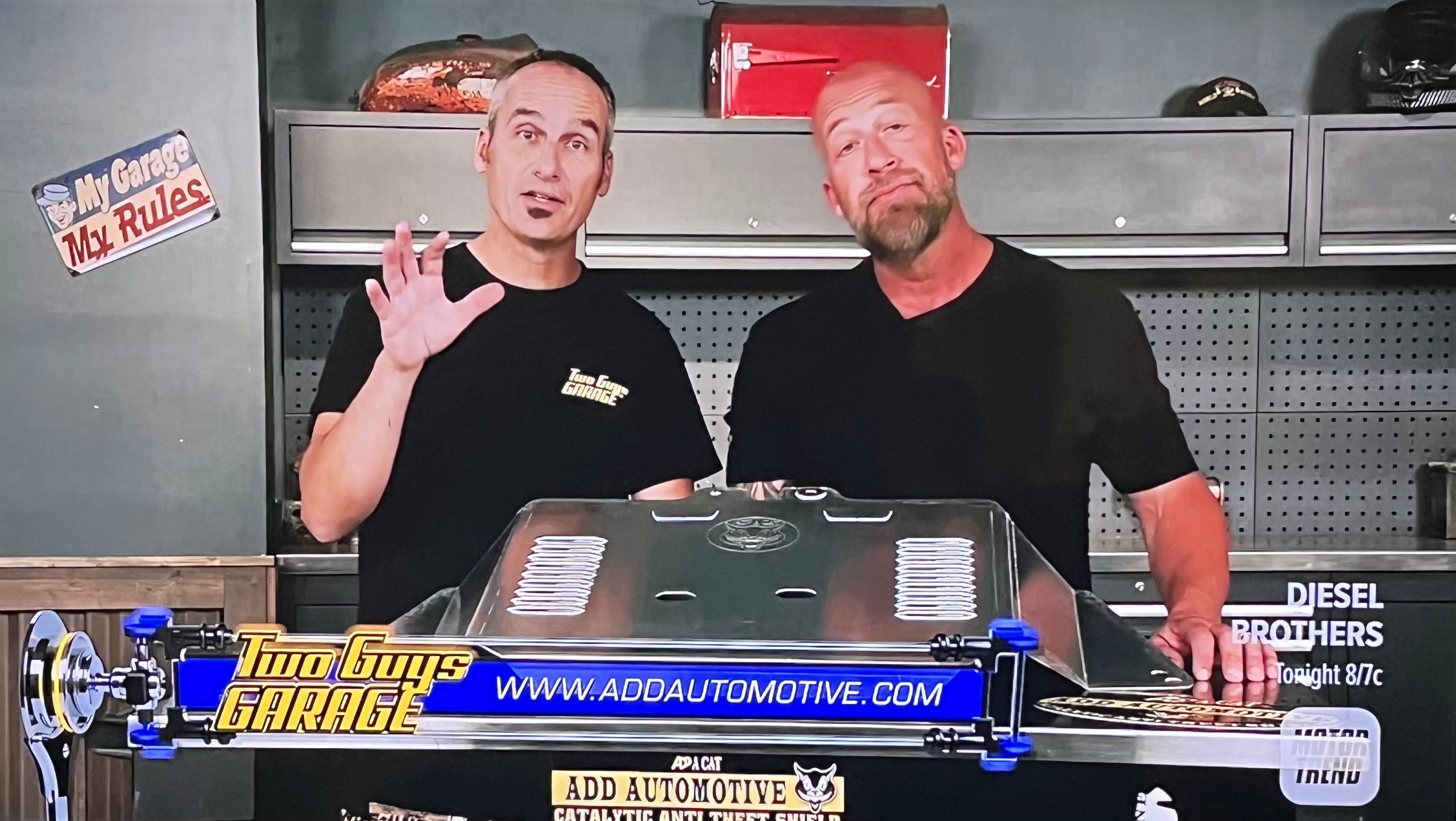
A properly designed catalytic converter shield covers the vulnerable area and places a substantial barrier between the thief and the exhaust components.
No anti-theft device can guarantee that a determined criminal will never attempt a theft. A shield is intended to increase the time, effort, noise and difficulty involved. Since catalytic converter thieves often depend on fast access, a protected vehicle may become a much less attractive target.
The California Bureau of Automotive Repair identifies protective plates, shields, clamps, cages and straps as theft-prevention options. The agency advises that a device must be installed correctly, must not damage or modify the converter, must preserve required identifying information and must not interfere with necessary ventilation.
The ADD A CAT Difference
ADD A CAT catalytic converter shields from ADD Automotive are engineered to provide strong, practical protection for supported vehicle applications.
Depending on the exact application, features include:
-
One-piece construction
-
3/32-inch 5052 marine-grade aluminum
-
Louvers for optimum ventilation
-
Proprietary security bolts
-
Security bit included with the hardware kit
-
Complete bolt-on installation
-
No drilling required on supported applications
-
Installation designed to take approximately 20 minutes
Vehicle-specific fitment matters. The correct shield should protect vulnerable exhaust components while maintaining ventilation, service access and appropriate ground clearance. Always confirm the vehicle’s year, make, model, engine and drivetrain before ordering.
ADD Automotive offers ADD A CAT shields for many popular Toyota, Lexus, Ford, Ram, Chevrolet, GMC and Isuzu vehicles.
How California Drivers Can Reduce Their Risk
Use multiple layers of protection instead of depending on only one deterrent:
-
Park inside a locked garage whenever possible.
-
In public, select a visible, well-lit area near entrances and security cameras.
-
Avoid leaving a vulnerable vehicle in an isolated location for an extended period.
-
Consider marking the converter with the VIN or license plate number.
-
Install a properly fitted catalytic converter shield.
-
Review comprehensive insurance coverage and the applicable deductible.
Security cameras can document a crime, and VIN markings can help identify a recovered component. A shield adds something different: a physical obstacle before the converter can be removed.
What to Do If You Hear or See a Theft in Progress
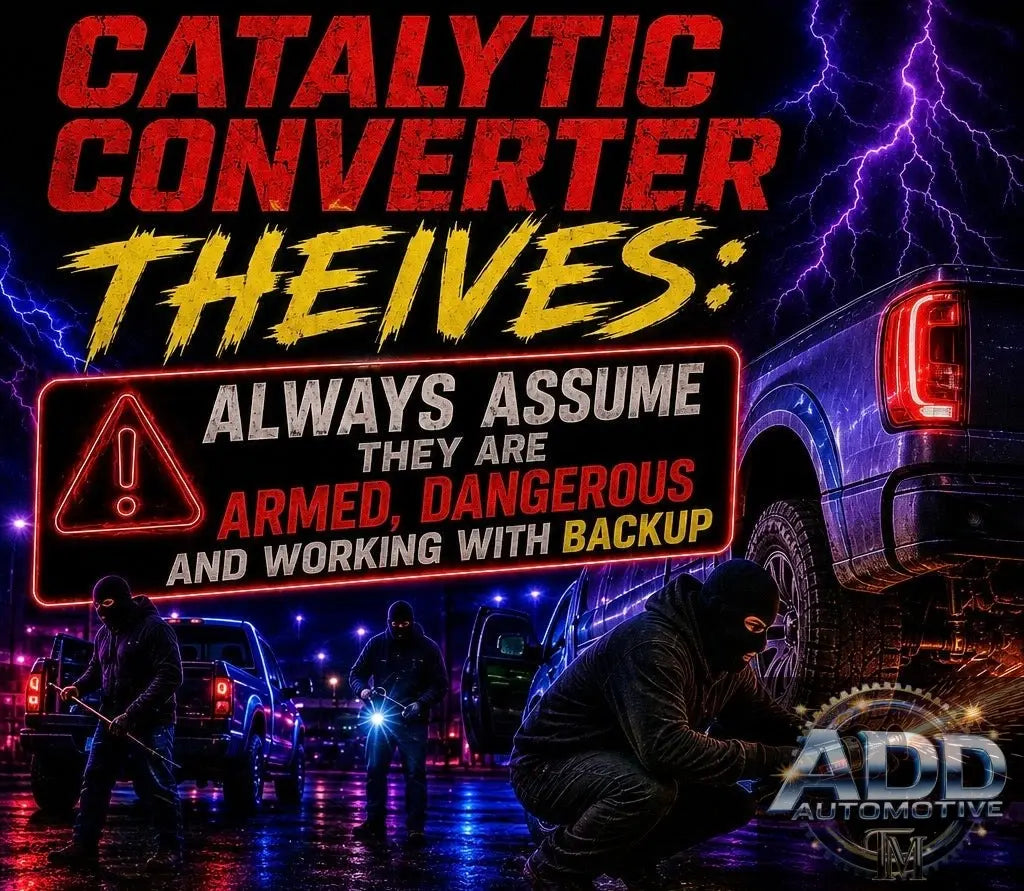
Do not confront suspected catalytic converter thieves. They may be carrying cutting tools, working with accomplices or armed. Stay at a safe distance and call 911.
If you discover the theft after it happened:
-
Do not touch the cut exhaust components; they may be sharp or hot.
-
Contact local law enforcement and file a police report.
-
Photograph the vehicle and damaged area if it is safe.
-
Contact your insurance company.
-
Have the vehicle inspected by a qualified repair facility.
-
Add physical protection after the repair to reduce the risk of another theft.
Catalytic converter theft is typically addressed through comprehensive auto coverage rather than liability-only insurance, subject to the policy terms and deductible. Verify your coverage directly with your insurer.
1,800 Reasons Not to Leave Your Converter Unprotected
The recovery of approximately 1,800 suspected stolen catalytic converters in one Southern California operation demonstrates that this is not merely a handful of isolated incidents. Organized buyers and storage operations can turn individual thefts into a large criminal business.
California is working to disrupt that business through enforcement and stronger laws. Vehicle owners can add another layer of defense by making the converter harder to reach and remove.
Do not wait for the roar of an open exhaust to tell you your catalytic converter is gone.
Protect what moves you with an ADD A CAT catalytic converter shield.
Shop ADD A CAT catalytic converter shields at ADDautomotive.com