

What to Do If You Encounter a Catalytic Converter Theft in Progress
Catalytic converter theft can happen incredibly fast. You may walk outside, hear the unmistakable sound of power tools underneath a vehicle, and realize someone may be attempting to steal a catalytic converter.
Your first instinct might be to confront the thief or try to stop them.
Don’t.
No catalytic converter—or vehicle—is worth risking your safety. If you believe you are witnessing a catalytic converter theft in progress, here are the steps you should take.
1. Keep Your Distance
The most important thing is to stay safe and avoid confronting the suspected thief.
You don’t know whether the person is armed, under the influence, or willing to become violent when confronted. Keep yourself, your family, employees, customers, or bystanders away from the situation.
If you are inside your home or business, stay inside whenever possible.
Your vehicle can be repaired. You cannot replace your life.
2. Call 911
If you believe a catalytic converter theft is actively taking place, contact local emergency services.
Give the dispatcher clear information, including:
- Your location
- Description of the vehicle being targeted
- Description of the suspect or suspects
- Description of the suspects’ vehicle
- Direction of travel if they leave
- Any other details you can safely observe
Follow the dispatcher’s instructions and do not approach the suspects.
3. Observe From a Safe Location
Information can be extremely valuable to law enforcement, but only collect it without putting yourself in danger.
From a secure location, try to remember details such as the suspects’ clothing, approximate height, vehicle make and model, vehicle color, distinguishing marks, and direction of travel.
A license plate can be particularly useful, but never approach a suspect or their vehicle just to obtain one.
4. Record Video Only If It Is Safe
If you can safely take photos or video from inside your home, business, or another secure location, the footage may help investigators.
Don’t move closer to get better footage.
Your personal safety is more important than getting the perfect picture.
If your home or business has security cameras, preserve the footage immediately so it isn’t automatically overwritten.
5. Don’t Block Their Escape
It may be tempting to move your vehicle behind the suspects’ vehicle or otherwise prevent them from leaving.
Don’t.
Blocking someone’s escape can dramatically increase the possibility of a dangerous confrontation. Let law enforcement handle the suspects.
6. Don’t Touch Anything Afterward
Once the suspects have left, wait until law enforcement says it is safe before approaching the vehicle.
Avoid unnecessarily touching tools, discarded parts, vehicle components, or other objects the suspects may have left behind.
There could potentially be evidence investigators want to examine.
7. Document the Damage
After law enforcement has finished and the area is safe, photograph the vehicle and damage.
Take pictures from several angles and document anything else that appears damaged.
If the catalytic converter was successfully removed, avoid driving the vehicle until you have received appropriate mechanical guidance. A vehicle with a damaged or missing exhaust system can be extremely loud and may have other issues requiring repair.
8. Contact Your Insurance Company
If your vehicle is insured for theft-related damage, contact your insurance provider as soon as practical.
Have your police report or incident number available along with photographs, vehicle information, repair estimates, and any security-camera footage you have.
Coverage varies by policy, so confirm the specifics directly with your insurer.
9. Don’t Assume the Thieves Won’t Return
If thieves attempted to steal a catalytic converter but were interrupted, don’t assume the problem is over.
They now know the vehicle’s location.
Consider moving the vehicle to a more secure location and taking additional precautions before leaving it unattended again.
Prevention Is Better Than Dealing With a Theft
Catalytic converter thieves typically want a target that can be accessed quickly. Anything that makes accessing and removing the converter more difficult may make a vehicle less attractive to a thief.
Parking strategies, lighting, cameras, alarms, VIN identification, and physical catalytic converter protection can all form part of a layered theft-deterrence strategy.
ADD A CAT Catalytic Converter Shields
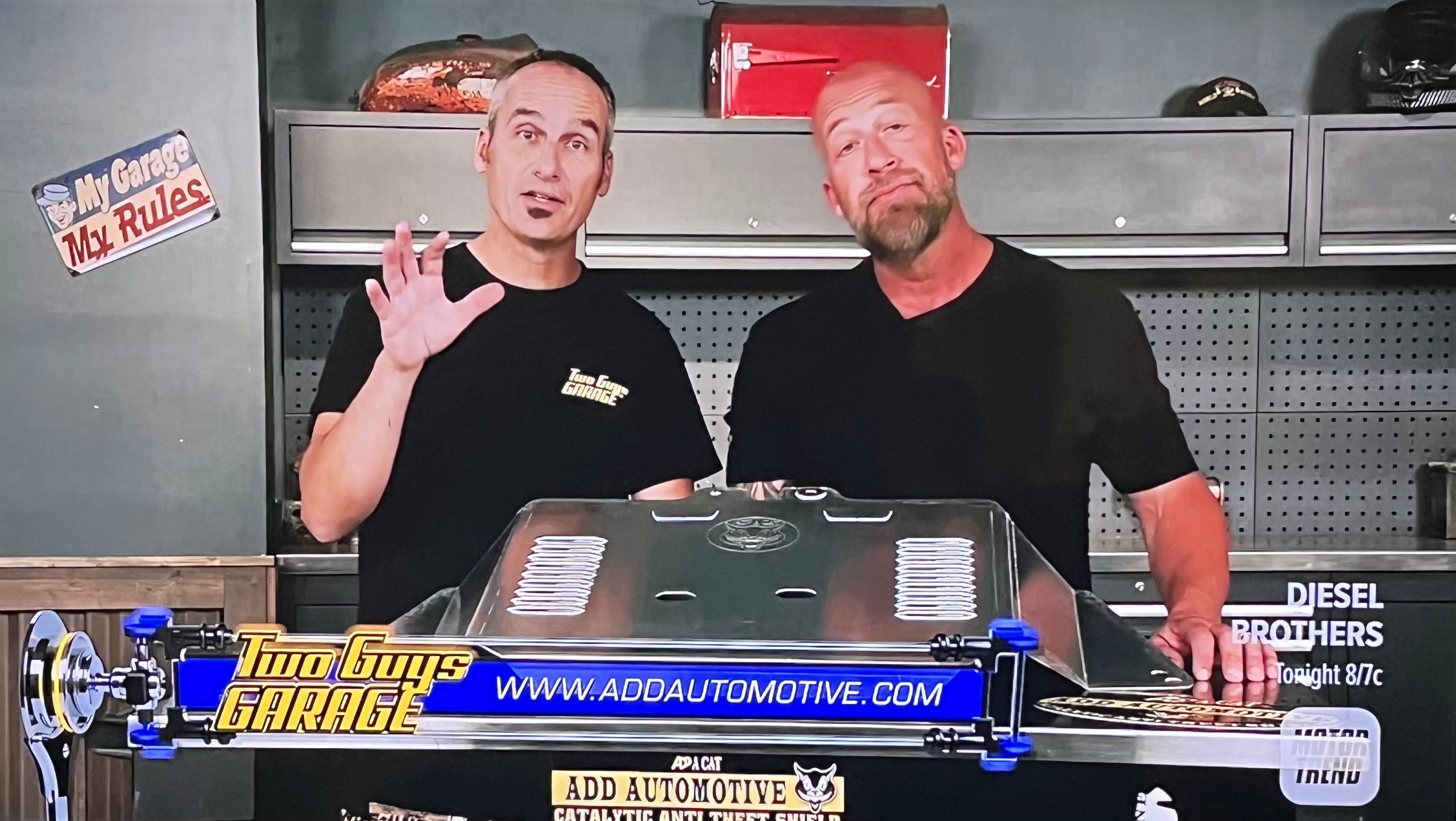
ADD Automotive’s ADD A CAT Catalytic Converter Shields are designed to add a physical barrier between a thief and the catalytic converter.
Instead of leaving the converter easily accessible underneath the vehicle, a properly fitted shield creates an additional obstacle that must be dealt with before the converter can be reached.
No anti-theft device can guarantee that a determined thief will never succeed, but making a theft more difficult, noisy, time-consuming, and inconvenient can help discourage opportunistic thieves.
Hear a Saw? Don’t Be a Hero.
Remember this simple rule:
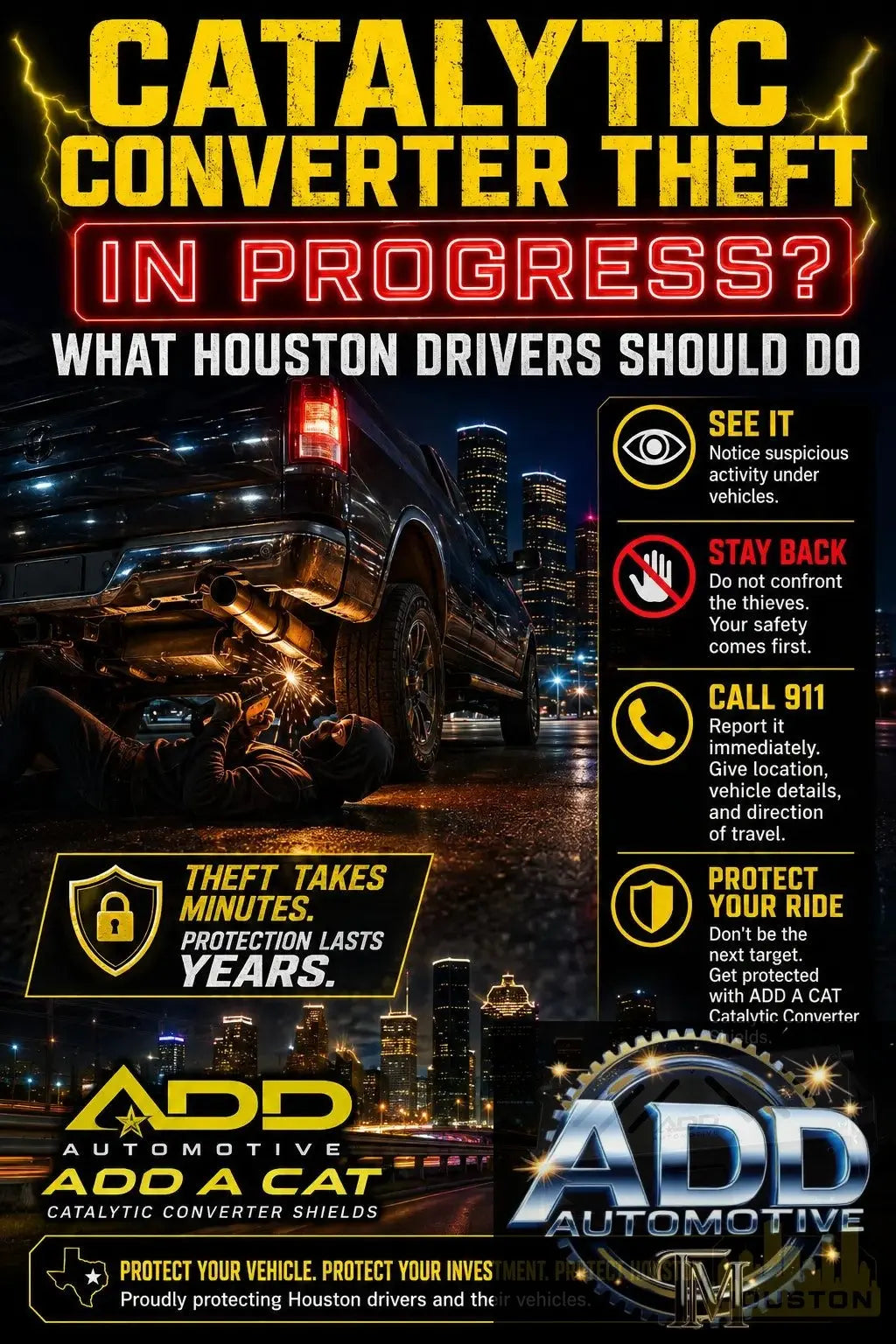
SEE IT. STAY BACK. CALL 911.
If you encounter a catalytic converter theft in progress:
Don’t confront the thief.
Don’t chase them.
Don’t block their vehicle.
Don’t put yourself in danger.
Observe from a safe location, provide law enforcement with whatever information you safely can, and let the police handle the situation.
Then take steps to make your vehicle a more difficult target in the future.
Protect Your Catalytic Converter Before a Thief Gets the Opportunity
Don’t wait until you’re standing next to your vehicle looking at an empty space where your catalytic converter used to be.
ADD Automotive
ADD A CAT Catalytic Converter Shields
Protect the converter. Protect the vehicle. Make thieves look for an easier target.




1 comment
Nolan - Uniworth Security Services
Good points here. From a security guard’s perspective, catalytic converter theft can be difficult to prevent because it can happen quickly. Regular patrols, good lighting, and keeping an eye on vehicles after hours can help spot suspicious activity before it becomes a bigger issue.
Good points here. From a security guard’s perspective, catalytic converter theft can be difficult to prevent because it can happen quickly. Regular patrols, good lighting, and keeping an eye on vehicles after hours can help spot suspicious activity before it becomes a bigger issue.